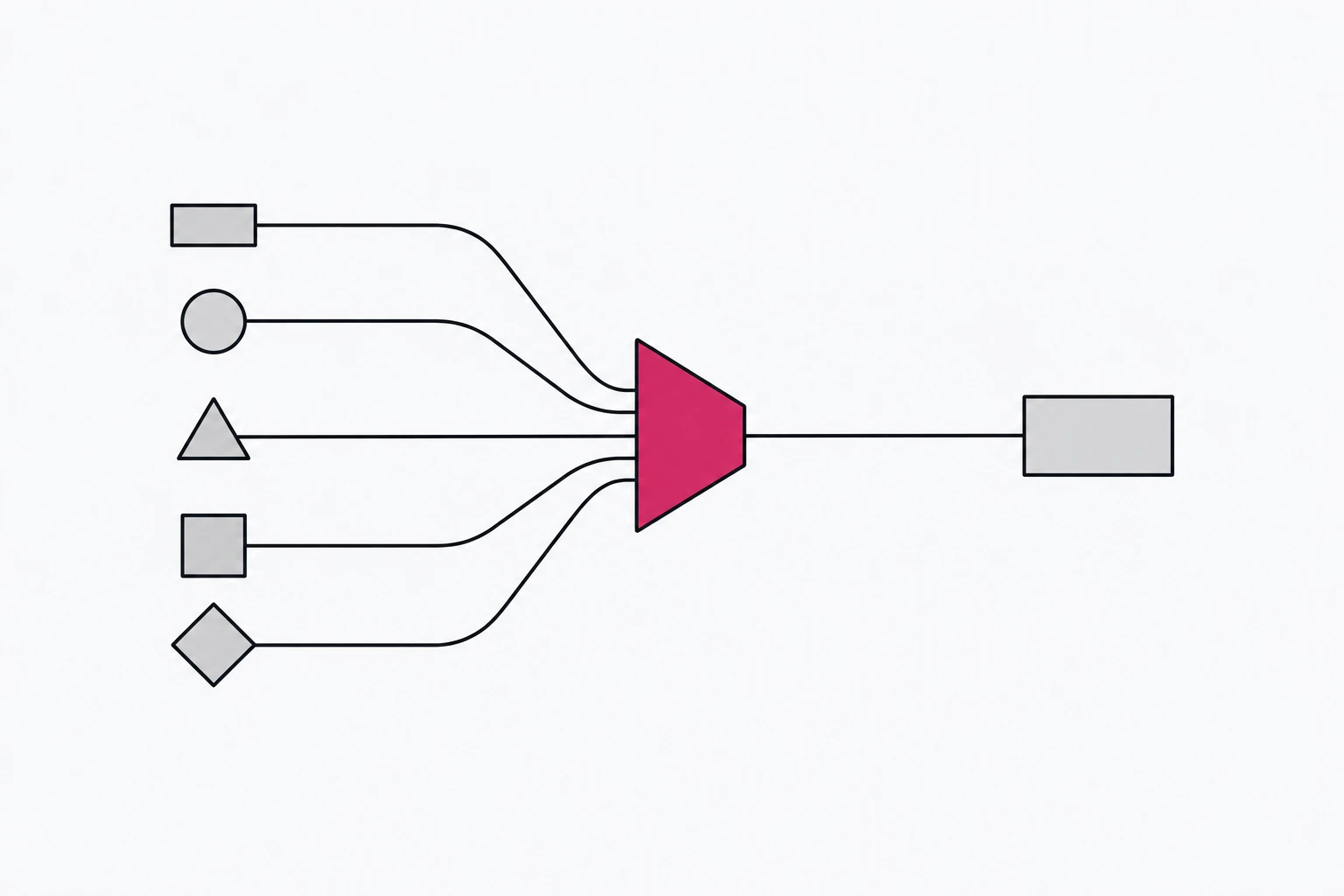
Which layer sent this redirect? The response rarely says
How to trace a multi-hop chain to the link service, CDN, CMS or plugin that decided it, and what the proposed Redirect-By header would add.

A broken redirect gives you two facts: a status code and a Location. It does not tell you which of the systems in front of your site made the decision. When a short link lands on the wrong page, the culprit could be the link service, a CDN rule, the CMS or an SEO plugin, and the response looks the same whichever one it was.
A proposed fix is moving through the IETF's HTTP working group list right now: a Redirect-By response header in which the component that decided the redirect names itself. This article gives you a method for tracing any chain with the headers that exist today, then explains what the proposal would add, what it deliberately won't do, and why the first hop in a chain should identify itself.
Five layers, one Location header
A typical campaign link passes through more machinery than anyone drew on the whiteboard. A QR code on a poster points to a short link on your branded domain. The link service answers with a redirect to https://. A CDN rule forces https://. The CMS knows the page moved and sends it to /spring-sale. An SEO plugin adds a trailing slash.
That is four hops, each a separate configuration, often owned by a different team. The status codes themselves are covered in 301, 302 or 308? Picking the right redirect; here the question is who sent each one.
Three failures account for most support threads:
- Loops. Two layers disagree, for example the CDN adds
wwwand the CMS strips it. The browser gives up with "too many redirects". - The wrong final page. A rule written for one campaign matches another, or an old CMS redirect outlives the page it protected.
- Lost query strings. One hop rebuilds the URL without the original parameters, and your UTMs disappear before the analytics tag ever runs.
In all three, the fix is easy once you know which layer is responsible.
Tracing a chain with what exists today
Start outside the browser, which caches permanent redirects and hides hops behind its own history. Ask curl to follow the chain and print every response's headers:
# Every hop's status line and headers (GET, response body discarded)
curl -sS -o /dev/null -D - -L --max-redirs 10 "https://go.example.com/spring?utm_source=poster"

# Just the summary: how many hops, and where it ended
curl -sS -o /dev/null -L -w '%{num_redirects} hops -> %{url_effective}\n' "https://go.example.com/spring?utm_source=poster"
curl -sIL works too, but it sends HEAD requests, and some servers answer HEAD differently from GET. Dumping headers from a real GET shows you what a visitor gets.
For each hop, note the host, the status, the Location, and any header that hints at who produced it. That last part is where today's tooling runs thin.
Platform headers tell you who was present, not who decided. Cloudflare adds a CF-Ray header that "identifies the data center processing the request", but the same page explains that Cloudflare passes the origin's response headers back to the visitor. A 301 carrying a CF-Ray may come from a Cloudflare redirect rule or from the origin behind it. Vercel sets server: Vercel and an x-vercel-id listing the regions a request hit, and its docs warn that the server value "can be overridden by other proxies (e.g., Cloudflare)". Cloudflare's own suggestion for its redirect rules is to use its Trace tool in the dashboard, which only helps if you have access to that account.
Some software already says what it did. Since 2017 a growing set of tools send a non-standard X-Redirect-By header. WordPress core sends it from wp_redirect() with the default value WordPress, which plugins can override through the x_redirect_by filter (the original changeset shows the default). Values seen in the wild, according to http.dev, include redirection, Rank Math, Yoast SEO Premium, WPML and Polylang Pro. Yoast's 2017 proposal showed the idea in one response:
HTTP/1.1 301 Moved Permanently
Location: https://yoast.com/westhost-wordpress-hosting/
X-Redirect-By: Yoast SEO Premium
Yoast described tracking down a misbehaving redirect this way: once the offending code sent its own X-Redirect-By, "within 2 minutes, we'd found the culprit."
The browser confirms what real visitors see. In Chrome DevTools, open the Network panel and tick Preserve log, which saves requests across page loads. Each hop then stays in the list, with "Redirect" in the Initiator column for requests that a redirect started. Use it after curl, to catch hops that only happen in a browser, such as JavaScript or meta-refresh redirects.
What the draft proposes
draft-devalk-redirect-by was filed by Joost de Valk, who started X-Redirect-By, on 19 July 2026. He traces the header to the Guardian's move from guardian.co.uk to theguardian.com, where "multiple systems were doing redirects, making it hard to find the source", as he wrote in a 2025 post. The draft is an individual submission with Informational status. No working group has adopted it, and it has no formal standing.
The current text is revision -01, dated 19 October 2026, and it changed after list feedback. In short:
Redirect-Byis a Structured Field (RFC 9651) whose value must be a String. A response carries at most one. A value that fails to parse is ignored.- The value should begin with a URI identifying the component, optionally followed by context. The draft's examples are
Redirect-By: "https://andwordpress.org/ " Redirect-By: "https://. Recipients treat the whole string as opaque.wordpress.org/ ; FrontEndBypass" - An intermediary that forwards a redirect without changing its
Locationshould leave the field alone. One that changesLocationbecomes the decision-maker and must replace the value with its own or remove it. X-Redirect-Byis deprecated. New implementations should send onlyRedirect-By. Existing ones should send both until their audience reads the new name, and both must name the same decision-maker.
The -00 text also allowed bare Tokens such as Redirect-By: WordPress. The switch to String-only values and URIs came from the HTTP working group's mailing list, where Asbjørn Ulsberg suggested a URI "to avoid collisions, ambiguity and confusion", and Rory Hewitt proposed String-only values and the FrontEndBypass example.
What it won't do
It is not proof of anything. The value is self-declared. When the draft was first posted, Hewitt pointed out that an attacker able to tamper with a response could add a reassuring value, and asked that the draft make it "very very very clear that this header can't be trusted". De Valk agreed. Revision -01 calls the field "a voluntary disclosure" that is "not an authentication or integrity mechanism", and says recipients must not base automated decisions on it.
It names one decider per hop. You still trace the chain; you just stop guessing at each step.
It should stay coarse. The draft says values should not include software versions, file paths, internal host names or the rule that matched. Its own counterexample is "WordPress 6.5.2 via wp-content/plugins/acme/redirects.php:214". A header for debugging should not double as a reconnaissance map.
No client acts on it. Mark Nottingham called the idea "reasonable -- it's lightweight and based upon current practice, and the information could help debugging", while noting he saw no "obvious automated use of the information in clients". Julian Reschke replied that it looked interesting. That is encouragement for a proposal, not adoption: the thread so far holds no call for adoption, and the field is still proposed, not standard.
Why the first hop should say who it is
A short link is usually the first hop, and the one people blame first. When the marketing team reports that "the QR code goes to the wrong page", the link service, the agency running the CDN and the site's developer each have reason to point at someone else. An identifier on every hop settles that in one curl command.
The privacy rule cuts the same way for link services as for anyone. Naming the service is useful. Naming the routing rule, the campaign, the customer workspace or the internal node that matched is not, and the draft's guidance against that detail is right.
Recognising a rii.link hop today
rii.link sits at the front of a chain as the routing hop: the response from your custom domain whose Location is the destination your rules picked for that visitor. The documentation we checked lists no identifying header, so recognise it by what it does. The request goes to your branded link domain, and the answer is a 302 unless you chose 301, 307 or 308 for that redirect in the dashboard; links created through the API always answer with a 302.
Two settings explain most "rii.link broke my link" reports. Append original query params is off by default, so a ?utm_source=poster added to the short link does not reach the destination unless you turn it on. Routing rules evaluate top-down, first match wins, and the base URL is the fallback, so a visitor who matches an earlier device or country rule lands somewhere other than where you tested. The dashboard's routing tester runs a simulated visitor through your rules before you print anything.
A debugging checklist
- Reproduce outside the browser with curl, following redirects and dumping every hop's headers from a
GET. - Write the chain down: host, status and
Locationfor each hop. - For each hop, look for
Redirect-ByorX-Redirect-Byfirst. If present, you have a claimed decider; verify it in that layer's configuration. - Treat
CF-Ray,serverandx-vercel-idas evidence of which platforms the request passed through, not of who made the decision. - Find the first hop where the URL goes wrong: a dropped parameter, a wrong host, or a path you didn't expect. That hop's layer owns the bug.
- Check redirect rules in order of the chain: link service, CDN or edge rules, server or load balancer configuration, CMS, then plugins.
- Re-test in a browser with Preserve log on, to catch hops that only happen there.
- If you run one of these layers, send an identifier:
X-Redirect-Bytoday, andRedirect-Byif the draft progresses. Keep it to a name or URI.
Written by
Florian
Florian builds rii.link, the routing layer behind short links: redirects, dynamic responses and links that answer AI agents. He writes The Redirect about what happens between a click and its destination.