ChatGPT's missing tags showed who owns your AI attribution
For a week in October, ChatGPT clicks arrived with no UTM tag and no referrer, so GA4 filed them as Direct. Here is which signals you control.

For about a week in October, clicks from ChatGPT reached websites carrying neither the utm_source=chatgpt.com tag nor a Referer header, and analytics tools counted them as Direct. The tag came back a week later, after what OpenAI reportedly called a bug. The referrer, by the last reports, did not. The visits were never lost; they were mislabelled. The lesson to take away is that your "AI Assistant" channel runs on two signals that someone else's frontend sets, and either one can disappear without notice. Here is what each signal does, how GA4 uses them, and what you can still control.
The week ChatGPT went Direct
GPT-6 reached paid ChatGPT plans on 7 October and Free and Go users on 8 October, Search Engine Journal reported. Within a day, analysts saw ChatGPT referrals fall off a cliff.
Cedric Huesler, a senior director of product management at Adobe, explained the mechanism on LinkedIn, as quoted by Search Engine Roundtable: "GPT-6 opens links with window(.)open(url, "_blank", "noopener,noreferrer") and drops ?utm_source=chatgpt(.)com. There's no tag and no referrer, so your analytics files the visit under direct."
His numbers show where the traffic went. On about 500 pages where ChatGPT drove at least 5% of visits, comparing 9 to 13 October with the week before, ChatGPT visits fell by about 31,000 a day while Direct grew by about 26,000 a day on the same pages. He called it early data: four days, one sample.
Other trackers measured the same break from different angles:
- Profound tracked the share of ChatGPT answers whose cited links carried the tag: 98.5% on 8 October, about 67% on 14 October, then about 5% to 12% for roughly a day as GPT-6's new "Intelligent UI" answers spread.
- LLM Pulse saw about 46% fewer ChatGPT sessions on 9 to 11 October than on the same days in the two previous weeks, with total traffic roughly flat.
- Graphite's Ethan Smith told SEJ that 95% of mobile ChatGPT visits to Graphite's sites relied on the tag alone.
According to Relevant Audience's timeline, Huesler asked OpenAI on 14 October and was told it was a known bug. A fix began rolling out around 02:00 Pacific on 15 October. By 09:00, tagged clicks were back to roughly 95% to 100% of the same hour a week earlier. Huesler's update: "Relieved. It was a bug." Profound's own data shows the tag on about 99% of answers from 06:30 UTC on 16 October.
Two caveats matter. First, the bug confirmation is secondhand: OpenAI told Huesler privately, and both Relevant Audience and SEJ report that OpenAI's release notes for 1 to 15 October do not mention it. Second, Huesler wrote that the referrer was "still missing on most ChatGPT clicks" after the fix, and Scalevise still called it "unreliable for many ChatGPT clicks" on 20 October. We found no later report saying it has come back.
Three signals, and who sets each
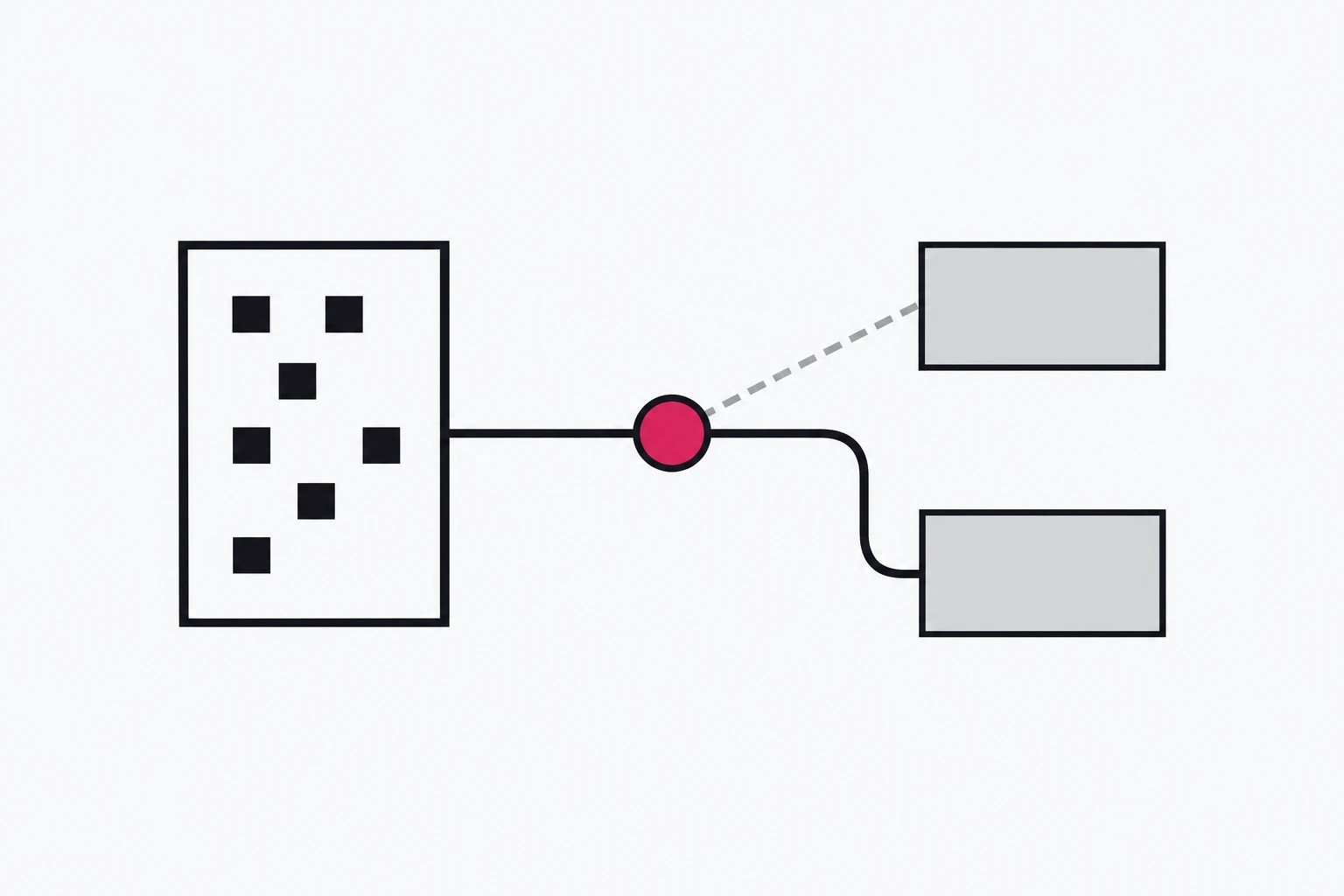
An AI-assistant click can tell your analytics where it came from in three ways. You control only one of them.
The UTM tag is the assistant's choice. ChatGPT appends utm_source=chatgpt.com to the links it shows. Nothing obliges it to, nothing documents when it does, and as October showed, a frontend change can drop it.
The Referer header is the opener's choice. Browsers send it by default: with no policy set, the default is strict-origin-when-cross-origin, which for cross-origin HTTPS requests sends the origin only, per MDN. So unless the opening page says otherwise, a click from chatgpt.com carries just https://. The page that opens the link can switch that off. MDN on rel="noreferrer" says it instructs the browser "to omit the Referer header and otherwise leak no referrer information". The window.open equivalent is the noreferrer feature, which per MDN makes the browser "omit the Referer header, as well as set noopener to true". That is the flag Huesler saw in GPT-6.
Your own link is your choice. If the URL the visitor clicks is one you created, with its own tags in the destination, the attribution travels in the URL itself, and whoever opens it cannot strip it without rewriting the link.
ChatGPT is not the only assistant changing its mind. Gemini started tagging cited links with utm_source=gemini in September without documentation; SEJ covered it on 1 October, and Google's John Mueller replied that "it would be great to have these retained (in addition to the UTM-tagging)", referring to the referrer. By then the tag may already have been gone again: consultant Natzir Turrado's server logs, reported by PPC Land on 1 November, show tagged Gemini visits dropping to almost nothing around 28 to 29 September, while visits with a gemini.google.com referrer stayed flat. Google has said nothing either way.
How GA4 decides between AI Assistant and Direct
GA4's default channel group describes AI Assistant as "the channel by which users arrive at your site from sources like ChatGPT, Gemini, Deepseek, Copilot, or Grok". A session lands there in one of two ways: its medium is exactly ai-assistant, or its referrer matches Google's list of AI assistants, in which case GA4 sets the medium to ai-assistant itself. Google does not publish that list on the page.
In practice GA4 recognises a ChatGPT visit from the tag, the referrer, or both. Where the referrer was already absent, as for 95% of mobile ChatGPT visits to Graphite's sites, the tag was the only clue left.
Direct is the residue: source exactly (direct) and medium (none) or (not set). A visit with no tag and no referrer has nothing else to match.
That is why the popular advice to "fix it with a regex channel group" does not work for October's visits. A custom channel rule matches on source, medium or referrer. Those visits carried none of them, so no rule, written before or after, can pull them out of Direct. The history for 8 to 15 October stays wrong, and the only honest correction is an annotation and an estimate.
The link you own is the only signal you set
You cannot make ChatGPT tag its links or keep the referrer. You can decide what is in the links you put where assistants and their users will find them:
- links in your docs and help-centre answers that assistants quote;
- URLs returned by your own MCP server or API tools, which an agent passes straight to the user;
- links in answers your support team or community shares in chat;
- links in product feeds and any curated pages you publish for AI crawlers.
For each surface, use a dedicated link with its own destination tags. If you want those visits in GA4's AI Assistant channel, set the medium to ai-assistant yourself, since that matches the rule exactly; otherwise use the medium your UTM naming convention already defines. For example:
https://docs.example.com/setup?utm_source=mcp-server&utm_medium=ai-assistant&utm_campaign=tool-outputA click that goes through your own redirect has a second advantage: the redirect server sees the request whatever the opener did to the referrer, so you have a click count that does not depend on the Referer header or on the analytics script loading.
Be honest about the limit. Most ChatGPT citations point at your canonical pages, chosen by the model, not at the short links you would like it to use. Your own links cover the surfaces where you hand over the URL. They do not repair attribution for organic citations, and nothing you control does.
Where rii.link fits
rii.link gives you that link on your own domain (two custom domains on the Free plan, per the pricing page). Its Analytics & UTM guide describes a campaign-tag builder that lowercases source and medium and replaces a tag already on the URL instead of duplicating it, with reports that split clicks by the tags on the short link and the tags on the destination. Clicks are counted at the redirect, with known bots excluded from the totals and visitor IPs anonymised before storage. Links can be created with tags over the REST API (utm on POST /v1/) or by an agent through the MCP server, so each agent surface can get its own tagged link.
A playbook for the next silent change
- Annotate 8 to 15 October 2026 in GA4 and every dashboard that reports AI-assistant traffic, and note the referrer gap after it. Do not compare October's ChatGPT numbers with September's without that note.
- Watch ChatGPT and Direct together, per landing page, on pages where AI assistants bring a meaningful share. A drop in one with a matching rise in the other, on the same pages, is a labelling change, not lost demand.
- Set an alert on the swap: a sharp fall in AI Assistant sessions alongside a rise in Direct on the same pages in the same week. October's break showed up within a day for anyone watching.
- Read your server logs, carefully. OpenAI's crawler documentation says ChatGPT-User visits pages when users ask ChatGPT a question, and OAI-SearchBot surfaces sites in ChatGPT search. Those are fetches by OpenAI, not human clicks, so they tell you about citations, not visits. User-agent strings can also be faked; our piece on Web Bot Auth covers how to verify them.
- Ask people. A "How did you hear about us?" field on signup or checkout records the assistants that no tag or header reports.
- Count what you own at the redirect, as above, so at least one number in the report does not move when an assistant's frontend does.
The tag came back this time, within a week. The next change may not be a bug, and it may not come back.
Written by
Florian
Florian builds rii.link, the routing layer behind short links: redirects, dynamic responses and links that answer AI agents. He writes The Redirect about what happens between a click and its destination.