Counting clicks on short links can still need consent in the EU
What a redirect actually receives, what the EDPB says about tracking links, and why the stalled Digital Omnibus changes nothing for 2026.

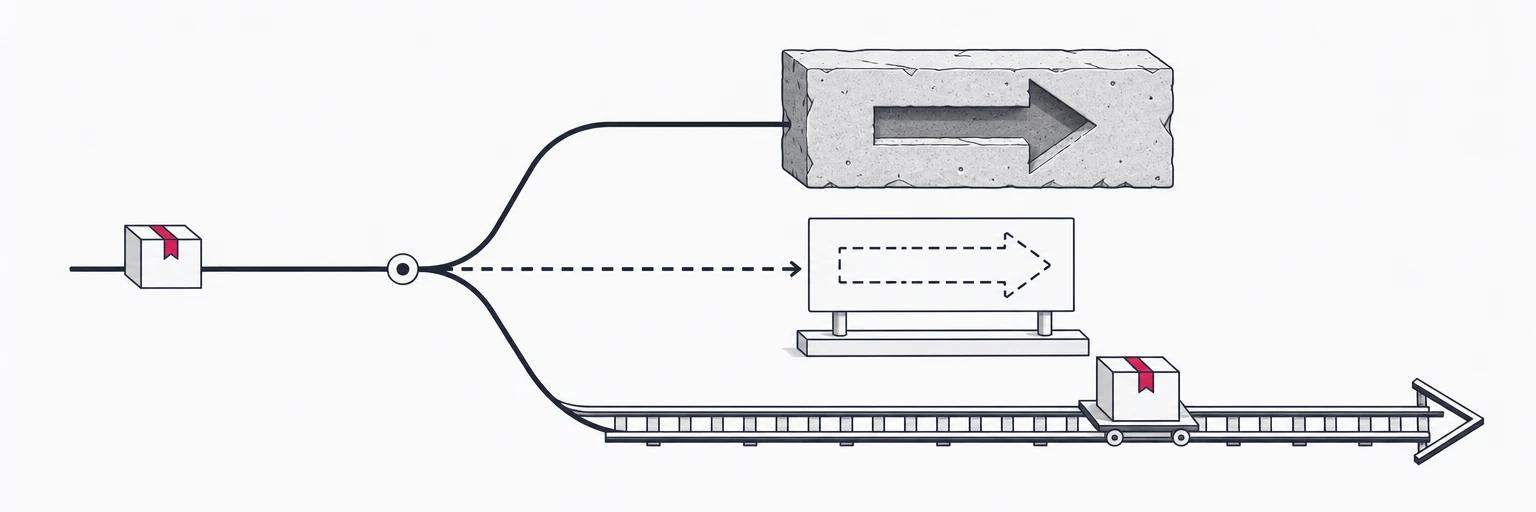
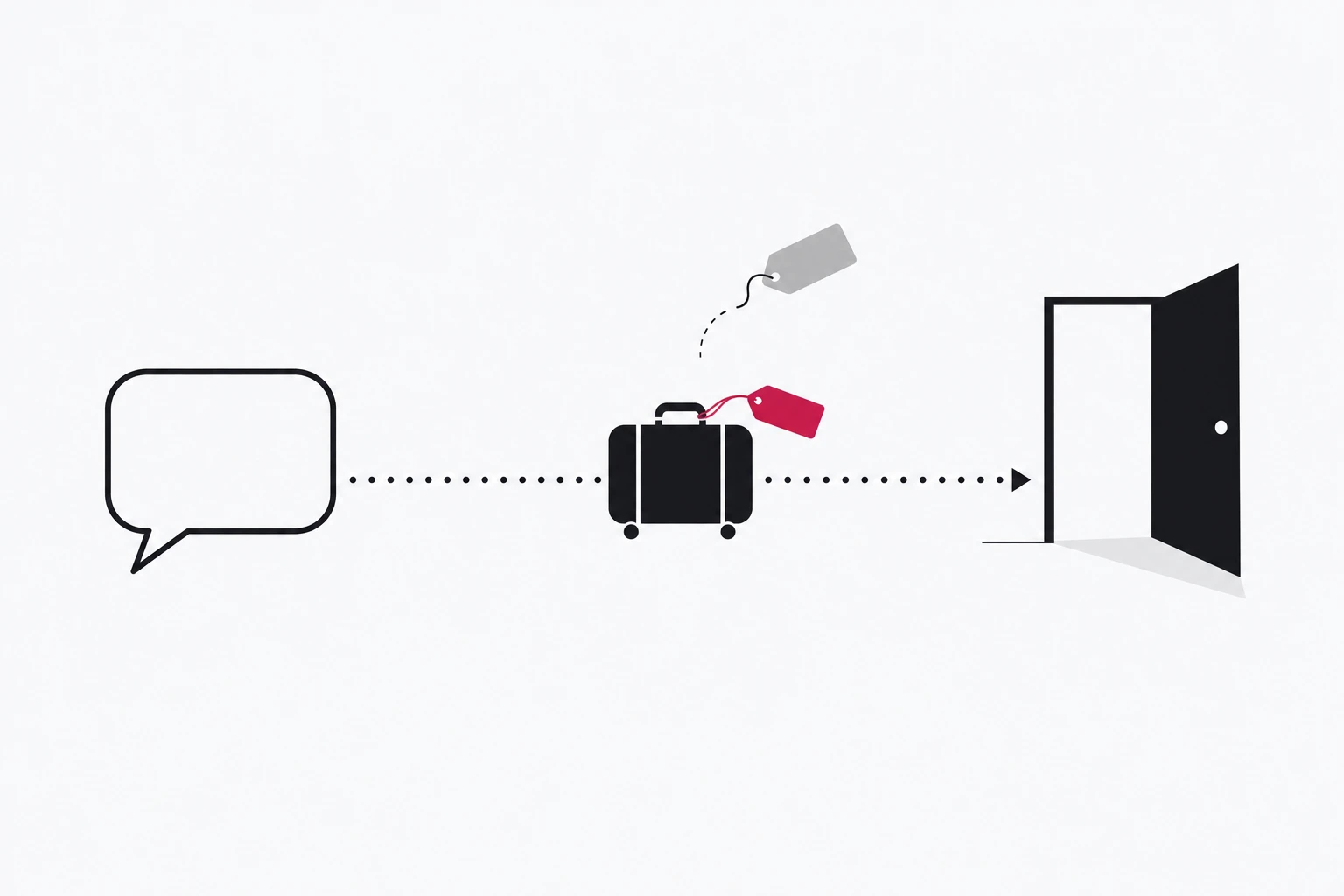
"A redirect sets no cookie, so link analytics need no consent" is the most common answer EU marketers get about short links, and it breaks down in one predictable case: when the link carries an identifier meant for one recipient. The European Data Protection Board's guidelines on Article 5(3) of the ePrivacy Directive treat that identifier the way they treat a cookie. Everything else about the click is a GDPR question, not a consent-banner question. And the Digital Omnibus that was supposed to rewrite the cookie rules has stalled again, so today's rules are the ones to plan on.
What a click actually sends
A short link is a plain HTTP request. Here is one click, sent with curl to a local test redirect, as the redirect's server logged it:
$ curl -s -o /dev/null -D - "http://go.example.com:8080/spring?utm_source=poster"
HTTP/1.0 302 Found
Location: https://www.example.com/spring-sale
Content-Length: 0

# server log
127.0.0.1 GET /spring?utm_source=poster HTTP/1.1
Host: go.example.com:8080
User-Agent: curl/8.5.0
Accept: */*
That is the whole exchange: the client's IP address, the host and path, the query string, and request headers. A browser sends more headers (a fuller user agent, language preferences and, depending on the page it came from, a referrer), but nothing on the redirect side needs a cookie to answer with a 302. So the "no cookie" half of the slogan is true.
The problem is the other half. Article 5(3) was never only about cookies.
What the EDPB says about tracking links
The EDPB's Guidelines 2/2023 on the technical scope of Article 5(3), version 2.0, adopted on 7 October 2024, name "URL and pixel tracking" as a covered technique and walk through it in paragraphs 47 to 51.
The mechanism, in the EDPB's words: tracking links work like pixels, "but the identifier is appended to the website address" (para. 49). When the link is opened, the site serves the resource and also "collects an identifier which is not relevant in terms of resource identification." Two steps then bring this under Article 5(3):
- Storage. Delivering the link to the user's device, by email, on a website or in any text message, "does constitute storage, at the very least through the caching mechanism", even when that storage is not permanent (para. 50).
- Access. Putting tracking information into a URL "constitutes an instruction to the terminal equipment to send back the targeted information", which the EDPB classes as "gaining of access" (para. 51).
Two more points from the guidelines matter for link people. Article 5(3) applies whether or not the information is personal data (paras. 10 and 12). And being in scope does not automatically mean consent: the exemptions, such as a service the user explicitly requested, still have to be assessed case by case (para. 56).
What the guidelines do not do is draw an explicit line between a link everyone receives and a link minted for one person. That distinction is the practical reading most teams apply, and it follows from the text's own test: is the extra value in the URL there to find the resource, or to identify who sent the request back? A short path that maps to one destination does the first. A sid=48213 appended for subscriber 48213 does the second. Note, though, that the EDPB's own example in para. 49 is e-commerce sites using such identifiers "to identify the origin of their inbound source of traffic", which is close to what a campaign tag does. Shared campaign parameters are a weaker case than personal IDs, not a clearly safe one.
In Germany the same rule sits in § 25 TDDDG, and German compliance guides already treat per-recipient click tracking in newsletters as needing consent.
The GDPR part applies either way
Even a link with no identifier at all produces personal data at the redirect. The client IP is the obvious one: in Breyer (C-582/14) the Court of Justice held that a dynamic IP address can be personal data for a website operator that has legal means to identify the person behind it, for example through the authorities and the access provider after an attack.
So for every link, someone has to decide four things:
- Legal basis for processing the click (consent, or a documented legitimate interest for aggregate measurement).
- Minimisation: does the IP need to be stored in full, or only long enough to derive a country?
- Retention: how long raw click rows live before they are deleted or aggregated.
- Roles: if a link service runs the redirect, it is usually a processor, and you need a data processing agreement.
None of this needs a banner on the link. All of it needs a written answer.
Three common setups, sorted
A campaign short link on a poster. go.brand.com/, identical for everyone. No per-person identifier is stored on or read from the device, so this is the easy case under Article 5(3) on the reading above. The GDPR work remains: truncate or discard IPs, keep aggregates, set a retention period. Conservative setup: no appended IDs, UTMs that describe the campaign rather than the person (see our UTM naming guide).
A newsletter link with a subscriber ID. This is paragraphs 49 to 51 almost word for word: an identifier for one recipient, delivered to their device, sent back on click. Treat it as consent-based unless your DPO documents an exemption, and remember that a share of those "clicks" are security scanners, not people (we covered that separately). Conservative setup: per-recipient IDs only for subscribers who opted into tracking; a shared link for everyone else.
A QR code per unit or per customer. The guidelines do not discuss printed codes, which reach the phone through a camera rather than an email. But once a code is unique to one customer, the URL it opens carries a per-person identifier and the same logic as the newsletter case applies. A code per product batch or per poster location identifies a place or a thing, not a person, and sits with the poster case. Conservative setup: never encode customer numbers in a printed URL; use a code per location or batch.
What the Digital Omnibus would change, and when
The Commission tabled the Digital Omnibus on 19 November 2025 (COM(2025) 837, procedure 2025/0360(COD)). It proposed moving device-access consent into the GDPR, widening the consent exemptions, letting one choice last six months and having browsers send consent signals.
The Council has since pulled most of that back. Its draft negotiating mandate of 2 October 2026 (document 13886/26), as reported by PPC Land, deletes the proposed Articles 88a and 88b, keeps the rule in Article 5(3) of the ePrivacy Directive, drops the browser-signal obligation, cuts the wait before asking again after a refusal to four months, and lists six strictly necessary purposes exempt from consent, including first-party audience measurement under conditions. That last exemption is the one that could matter for link analytics, if it survives.
It has not been adopted. Ambassadors failed to agree at Coreper on 7 October, and the vote rescheduled for 11 October was not held, with Germany holding out over Data Act trade-secret rules. In Parliament, the joint LIBE and ITRE draft report of 22 June 2026 drew more than 1,750 amendments, and trilogues cannot start until both sides have positions. Even after adoption, the Council text gives the ePrivacy change six months to apply and Member States 24 months to transpose, according to The European Post. For 2026 and well into 2027, plan on today's rules.
Where rii.link fits
rii.link counts clicks at the redirect, with no pixel, script or third-party cookie on the redirect path. Per its privacy policy and security page, visitor IPs are used to derive a country from a locally held database and to detect abuse, and are truncated to the /24 (IPv4) or /48 (IPv6) network prefix before a click is stored. For click data on your domains, rii.link acts as your processor and you are the controller.
Two things it does not decide for you. The query string is part of what a click records, so an identifier you append ends up in your analytics, and the consent question for that identifier is yours. And retention is set by plan and policy, so check it against the period your DPO wants.
Checklist for the DPO conversation
- Which of our links carry a per-person identifier (subscriber ID, customer number, unique QR)? Those are the Article 5(3) cases.
- For those, is there consent, or a documented exemption?
- For all links: what is the legal basis for click analytics, and is it written down?
- Is the full IP stored anywhere, by us or our link service? If so, why?
- How long are raw clicks kept before deletion or aggregation?
- Is there a processing agreement with every service in the redirect path?
- Who rechecks this when the Digital Omnibus is adopted?
Written by
Florian
Florian builds rii.link, the routing layer behind short links: redirects, dynamic responses and links that answer AI agents. He writes The Redirect about what happens between a click and its destination.