Google search clicks now pass through a redirect you can't read
Every result now hops through a google.com/goto 302. What has been tested about referrers, UTMs and HEAD requests, what is only asserted, and what to check this month.

Google Search now sends result clicks through google.com/, an opaque token that answers with a 302 to the real page. Google confirmed the rollout to Search Engine Roundtable on August 26, 2026. For most sites the attribution news is better than the headlines: the one published test found organic visits still arrive as organic. What changed is what anyone can see before they click, and what a link checker can learn with a cheap request.
This piece puts the tested facts in one place, flags what is still only asserted, and draws the lesson for anyone who runs links.
One click, now three hops
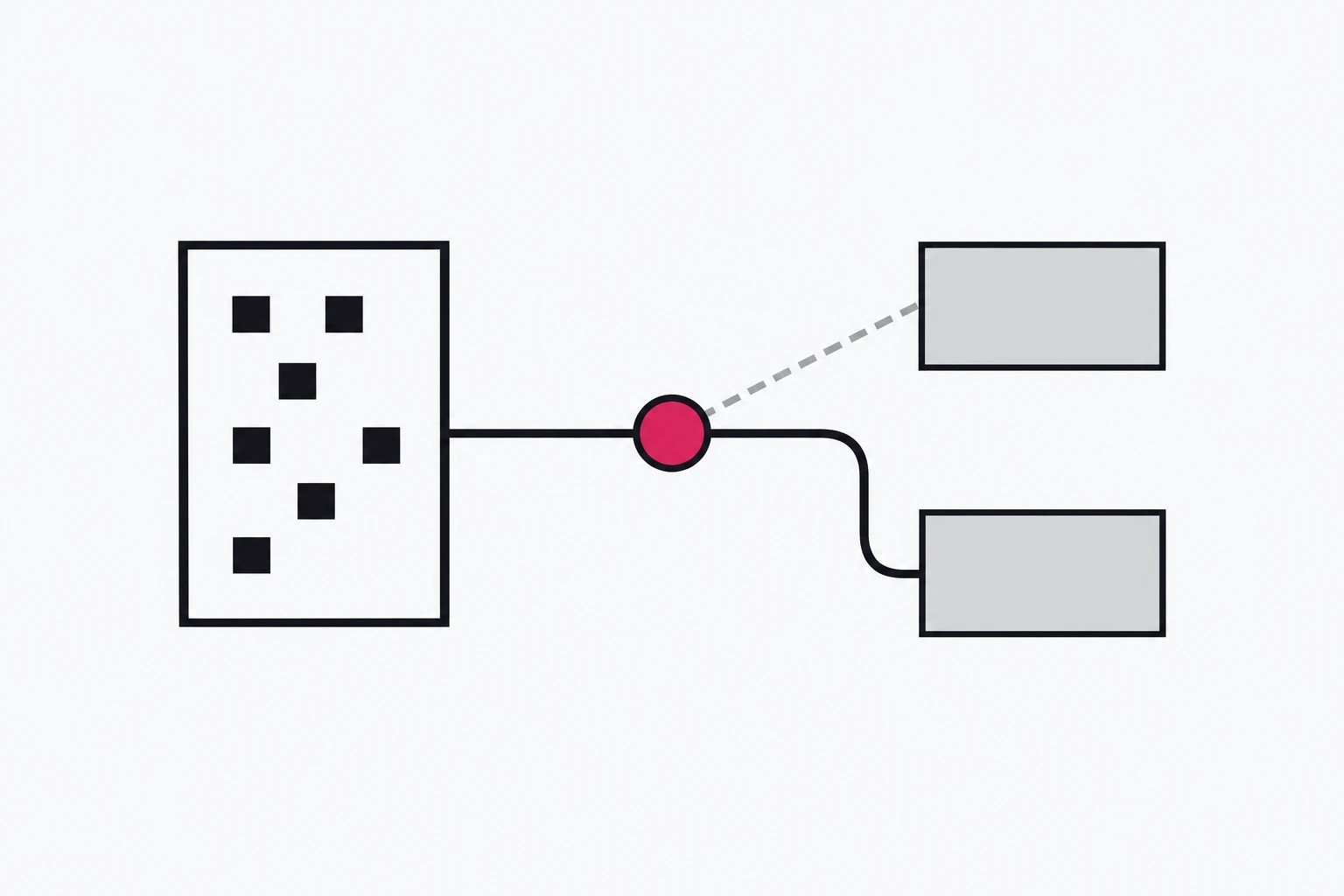
Until this summer, the href on a Google result was the destination itself. Now a click goes:
- Results page →
https://www.google.com/ goto?url=CAES… - Google answers
302 Foundwith the destination in theLocationheader. - The browser loads the destination. If that destination is itself a short link, its redirect is a fourth hop, and so on.
The timeline is well documented. Alex Greenland posted the first public sighting on June 23, 2026; Brodie Clark documented it on July 2 across both ads and organic listings, with a 302 to the destination; and on August 26 Nozzle's Derek Perkins reported "near 100% rollout across several residential ip providers", according to PPC Land's reconstruction. Google's only statement so far: "We have a long history of deploying technical measures against evolving forms of abuse, and we regularly take steps to protect our services and users." Google has published no documentation for the parameter.
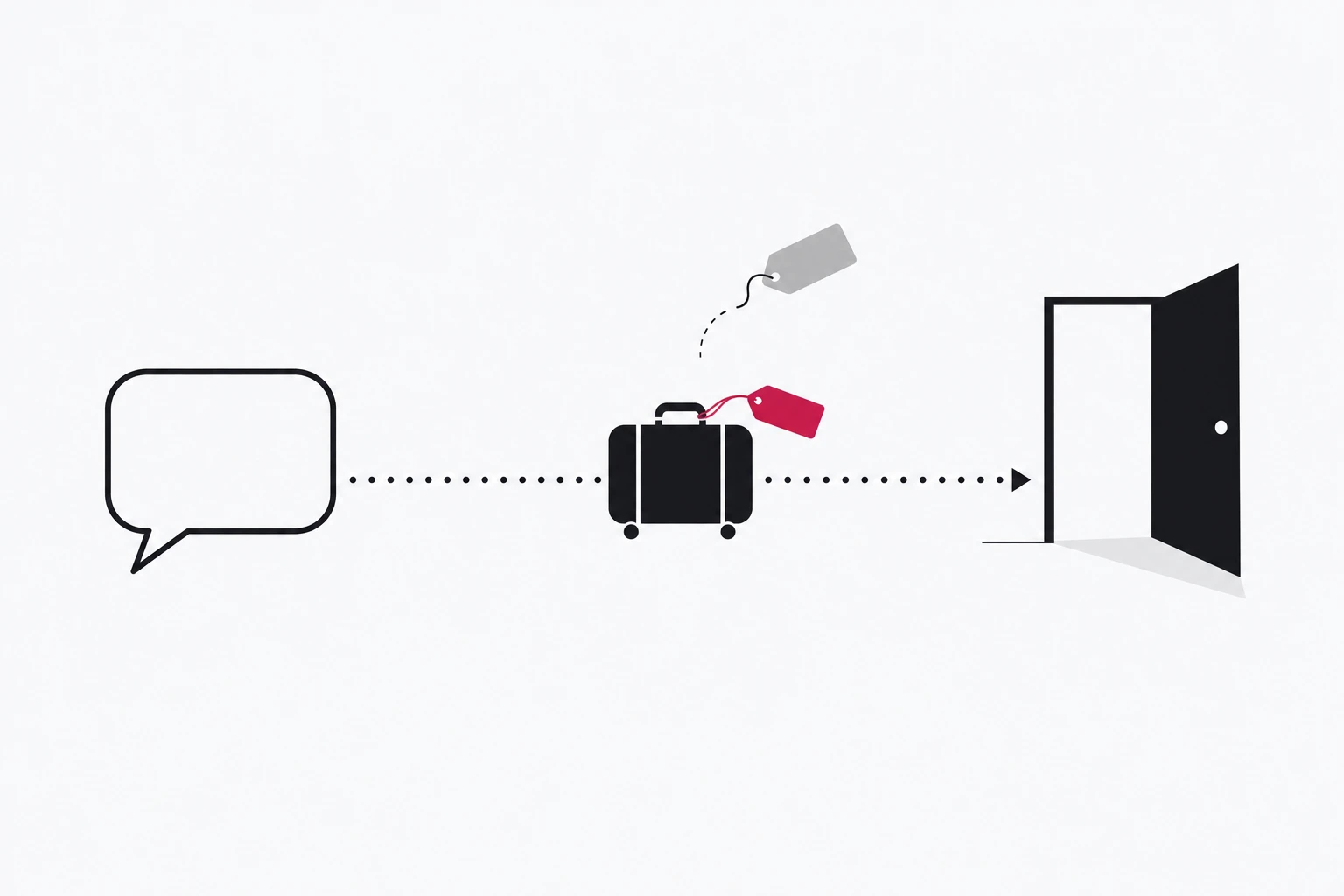
The token is not a disguised URL. ScrapingBee collected 324 tokens (published September 7) and found a Base64URL-encoded protobuf envelope whose payload is protected binary data: it "can be Base64URL-decoded and parsed structurally, but you cannot practically decode it back into the destination URL locally." OpenWeb Ninja (September 8) saw the same result get a different token on each of three page loads, all resolving to the same page, and tokens saved on September 4 still resolved four days later. The only way to learn where a token goes is to ask Google.
What reaches your site: tested versus asserted
The fear in agency posts was that organic clicks would land as Direct. In July, Digital Applied laid out that scenario and rightly said "nobody outside Google has published a header-level analysis of the live behavior". Since then, some of it has been tested.
The referrer: tested once, and it survives. Attributer ran organic clicks across 10 device and browser combinations (published August 31): Chrome, Safari and Firefox on macOS; Chrome, Edge and Firefox on Windows 11; Safari and Chrome on iPhone; Chrome and Samsung Internet on Android. In all ten the referrer arrived and the visit was classed as Organic Search. "We couldn't produce a single case where the redirect caused a visit to be misfiled as Direct." Two caveats: Attributer sells attribution software, and the post gives no visit counts or repetitions per combination.
The referrer policy: asserted, not measured. Attributer says Google's results pages use the origin policy, so your site receives https:// and nothing more. That matches what Google announced in March 2012, when it started sending origin-only referrers and told analytics vendors to detect organic search "by detecting bare Google host names". The goto hop does not change that picture as far as anyone has measured, but nobody published the header capture.
UTMs and query strings on the destination: not tested by anyone. None of the pages we read for this piece, including Scalevise's GA4 analysis (September 24) and Eulerian's customer note (September 4), reports a test of whether parameters on a ranking URL arrive intact. The claim that "goto strips UTMs" has no evidence behind it either. If a page of yours ranks with a parameterised URL, check it yourself: click it from a signed-out window and compare the landing URL with the one Search Console reports.
Paid clicks: seen, not tested. Clark saw goto URLs on ads too, and ad clicks already passed through google.com/. No attribution test covered paid clicks or gclid.
Who gets goto links. OpenWeb Ninja captured them in signed-out sessions with gl=us on desktop, on almost every result type it checked. Its signed-in comparison was a single query. When Malwarebytes wrote on September 14, the rollout had not reached the author's location. Assume coverage varies by country and account state, and don't treat any one report as global.
HEAD and GET get different answers, which breaks link checkers
Two independent tests agree on the behaviour. ScrapingBee: "a normal GET request returns an HTTP 302 redirect with the actual destination in the Location header", while HEAD "returned 200 without a Location header." OpenWeb Ninja, probing without cookies, saw the same: GET gave a 302, HEAD gave HTTP/ with no Location. An altered or truncated token returned 400. Perkins told PPC Land the same thing: Google "does not let the HEAD request through".
Autom (August 31) says the opposite. Its guide is titled "read Location with HEAD", and it adds that Google "sometimes returns 402 (or another status) with a Location." It shows no HEAD output and no test detail. Autom sells a SERP API, as do ScrapingBee and OpenWeb Ninja, so weigh all three accordingly; on the HEAD question, two published tests beat one unsupported claim.
The practical consequence: anything that checks links with HEAD (uptime monitors, broken-link crawlers, the "does this redirect work" scripts in CI) will see a 200 on a goto URL and conclude it is a working page with no redirect. To resolve a goto URL, send a GET and do not follow the redirect:
# GET without following: ScrapingBee and OpenWeb Ninja both report 302 + Location
$ curl -s -o /dev/null -w '%{http_code} %{redirect_url}\n' 'https://www.google.com/goto?url=CAES...'

# HEAD: both report 200 and no Location header, so a HEAD-based checker sees no redirect
$ curl -sI 'https://www.google.com/goto?url=CAES...'
That GET costs a full round trip per result. Perkins estimates, as PPC Land reports it, that resolving every link in a five-page ranking report now takes 500 to 1,000 requests. If you debug longer chains, our piece on finding which layer sent a redirect covers tracing hop by hop, and 301, 302 or 308? explains why a 302 here, not a 301, is the expected choice for a per-click hop.
The trust cost of an opaque redirect
Google gives no reason beyond "abuse". Coverage widely reads it as anti-scraper: Barry Schwartz called it likely an attempt to make things harder for SerpApi, which Google sued in December 2025; that is his assessment, not Google's. Whatever the motive, opacity hits everyone equally.
Malwarebytes put the user cost plainly: "We often tell users to hover over a link before clicking it so they can check where it leads. That advice is less useful when hovering reveals an encoded Google redirect." Google still prints the claimed destination above each result, but the link itself can no longer serve as an independent check. Hover over a result today and the status bar shows a google.com/ address.
That is the general rule for anyone who runs redirects. A redirect earns trust when a person can read it before following it: a domain they recognise, a path that means something, a destination that stays where it was. It asks for blind trust when it is an encrypted token on someone else's domain. Google can afford to ask; your campaign links cannot. We covered how to make printed links pass the "check the URL" test in the quishing piece, and the same reasoning applies to every link you put in front of strangers.
What to check in your own data this month
- GA4 organic by browser, before and after late August. Compare Organic Search sessions by browser and device for July versus September and October. A sudden drop in one browser, with a matching rise in Direct, is the signal Attributer did not see; if you see it, it is worth investigating.
- Landing pages that turned Direct. Filter Direct sessions by landing page. Pages that rank but are rarely bookmarked should not gain Direct traffic.
- Parameterised ranking URLs. If any ranking URL carries parameters, run the signed-out click test above and note whether the landing URL matches.
- Rank tracker anomalies. Missing or delayed URLs in reports from late August onward may be the tracker resolving goto links, not a ranking change. Ask your vendor.
- Search Console as the reference. It is the natural baseline, but treat "Search Console is unaffected", which Decodo and others repeat, as an assumption: none of them shows evidence.
- Your own link checkers. Any script that uses
HEADto validate URLs copied from search results needs aGETfallback.
Where rii.link fits
When the page that ranks, or the link someone shares, is a rii.link short link, Google's hop sits in front of yours, and the click still reaches rii.link's servers, which count every human visit they answer, with bots filtered out and IPs anonymised before storage. Because links run on your own domain on every plan, the address under the result title reads go.yourbrand.com/, not a token, so the one check Google left people (reading the displayed URL) still works for you.
Written by
Florian
Florian builds rii.link, the routing layer behind short links: redirects, dynamic responses and links that answer AI agents. He writes The Redirect about what happens between a click and its destination.